
Anson County Court Record Requests
One office holds the file. The Anson County Clerk of Superior Court keeps the records for both courts. Those are Anson County Superior Court and District Court. Bring the case number and a party name. Know what you want: a public Case Summary, a filed document, a plain copy, a certified copy, an audio recording, or a transcript. For online viewing, the North Carolina eCourts Portal is the starting point for public Anson County case information. Remember, the Portal is not the official court record. Inspection and official copies still go through the Anson County Clerk file and counter.
- Locate the Anson case number, citation number, or the correct party name and identify the record sought.
- Use Portal Smart Search or the public Anson County Clerk terminal to locate the public Case Summary and confirm the file.
- Ask the Anson Clerk in person or by telephone at (704) 994-3800 which request route applies to the particular file or copy.
- Use the Clerk's counter and file in Anson for public inspection, paper-file access, copy preparation, certification, or a record that is not displayed online.
- For an Anson County Judicial Branch public-record request, use the online, mail, or in-person option that applies to the record type after confirming the route with the Clerk.
The Anson County Clerk posts no court-copy form, no email-copy promise, and no response-time promise. Traffic payments that qualify can be mailed. Mail the citation number and an accepted payment method. That payment option, though, does not create a mail-copy procedure for records. Older files raise questions. So do missing document images, restriction questions, and certified copies. All of them call for a direct request to the Anson Clerk. Never assume an online result finishes the job.
Anson Clerk Terminal Record Access
The self-service terminal inside the Anson County Clerk's office does more than back up a browser search. Per Judicial Branch records guidance, it can search Anson County criminal records two ways. Use a defendant name or a case number. It also opens public access to Anson County civil, special-proceeding, and estate information, within the rules that govern each case type. Paper case files stay in the Clerk's office of the county where the case sits. So an Anson matter means viewing the file in Anson. The terminal shines when the online docket search returns nothing useful and you still need to locate the case. Limits remain. It cannot unlock a sealed, confidential, juvenile, or otherwise restricted Anson County record. A screen result is also not a certified copy. The sensible order: find the right Anson case on the terminal or Portal. Then go to the Anson Clerk for file inspection, a prepared copy, or certification. Official court-record guidance lays out the terminal, paper-file, copy, transcript, and audio-recording channels.
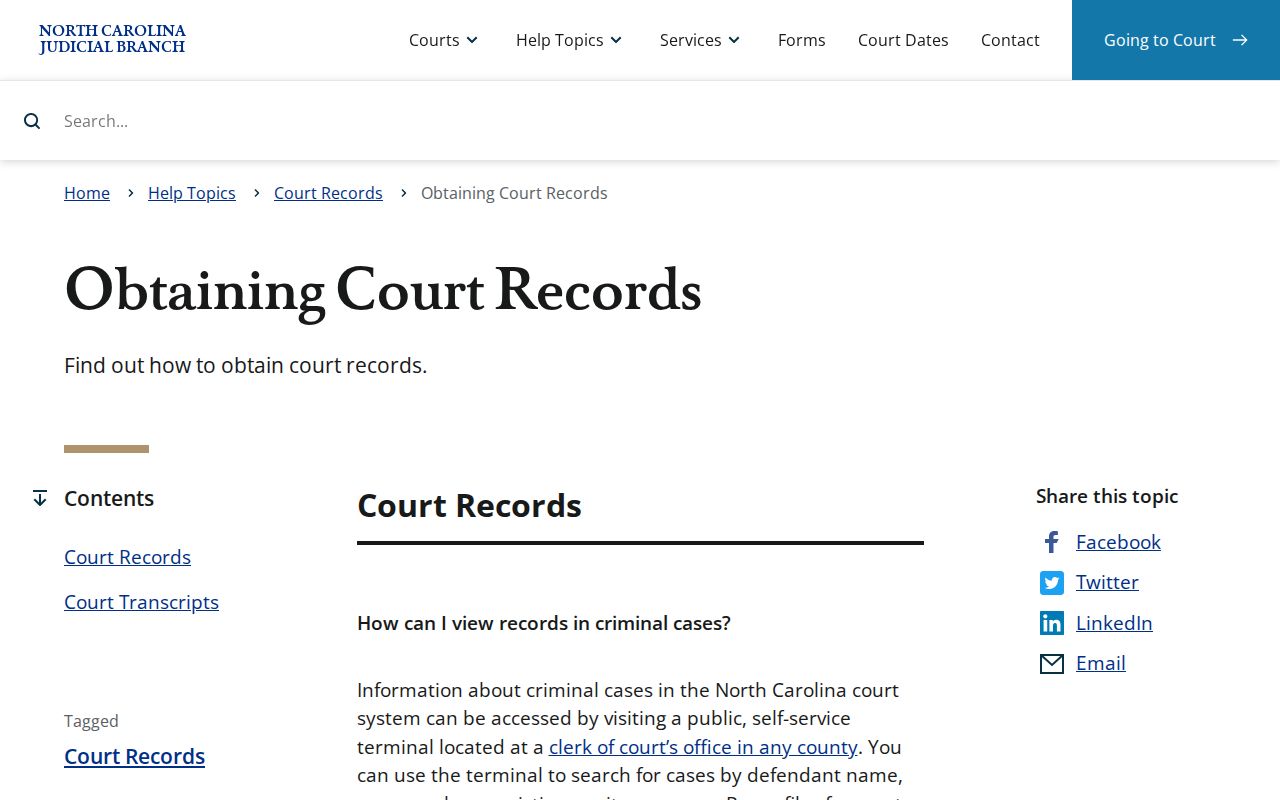
That same guidance shows why the Anson County Clerk terminal and the court file itself stay valuable whenever Portal access runs short for an Anson County docket.
Kinds of Court Records
An Anson County court record is not one product. The Case Summary or Register of Acts is an index and timeline. The Anson court file behind it can hold pleadings, orders, judgments, and exhibits. A certified copy adds the Anson Clerk's official certificate under seal. A transcript is different entirely. It is a word-for-word proceeding record prepared through a separate reporting channel, not a copy of the docket.
- Public Case Summary or Register of Actions with events, hearings, dispositions, and applicable financial information.
- Filed pleadings, orders, judgments, and public documents from the case file where available.
- Plain Clerk-prepared copies of documents in the file.
- Certified copies with a Clerk certificate under seal.
- Exemplifications, which are a higher-authentication Clerk service.
- Transcripts or available audio recordings through their separate documented channels.
A Portal result helps you find the file. It is not the same as every item above. An online Anson County document may simply be unavailable, and an official use of a record may call for the Anson Clerk's certification. So identify the product first. That step keeps you from requesting a docket index when you need an order, or from asking the Anson Clerk for a transcript that must come from the reporter or transcriptionist.
Anson Unified Court Record System
Anson County runs several court paths through one Clerk structure. The Anson County Clerk of Superior Court keeps the records for Anson County Superior Court and District Court alike. Those files cover felony criminal, misdemeanor and infraction, civil, family, special proceeding, estate, and judgment records. Anson County magistrates sit within the District Court division. They do not run a separate county clerk system. Probate and estate matters also go through the Clerk's office, not a separately elected probate official. Division still matters when you describe a file. Anson Superior Court District 21 takes felonies and civil matters above $25,000. Anson District Court handles misdemeanors and infractions. Family matters and civil matters at or below $25,000 sit there too. Magistrate small claims fit under the statutory ceiling when assigned there. Those jurisdiction rules point you to the right Anson County case path. The local Clerk remains the record keeper for the court file.
Court Records: What They Contain
The public Anson County Case Summary on the Portal sorts information into structured areas. Expect case identity, assignment or location, party information, causes of action in applicable civil categories, Case Events, Hearings, dispositions, and Financial Information. Which fields appear depends on the Anson County case type and public-access rules. Read the sequence with care. A past hearing or filing is not necessarily a current setting. And it is not automatically an official outcome.
| Case Information | Basic public identity and status information for the case. |
|---|---|
| Assignment Information | Publicly displayed court or location assignment information. |
| Party Information | The parties shown in the public case, subject to privacy limits. |
| Case Events | The chronological activity feed for filings, orders, scheduling acts, and other public events. |
| Hearings and Dispositions | Scheduled events and recorded outcomes, which should be read in context. |
| Financial Information | Applicable public balances or costs, with current payoff confirmation directed to the Clerk. |
A docket entry tells you what happened in Anson County court. But it does not show everything behind it. The paper file is a different thing. A pleading, an order image, or a certified judgment comes from the Anson file itself. You get them through the Clerk. To find a public case first, try the county's Docket Search path. Once the case number checks out, take it back to the Anson Clerk. That gets you the real document.
Anson Portal, Clerk Copy, and Certification
Anson County offers three separate products. Mixing them up costs time. The Portal shows public case information and a near-real-time Case Summary. A plain copy is something the Clerk prepares from the Anson file. A certified copy goes further. It is the Clerk's official version, backed by a certificate under seal. A Portal printout helps you follow a timeline. Certification belongs to the Clerk's record process.
The North Carolina Court Records help topic points the way to the official records gateway. It also covers expunction information. It helps you pick the right Anson County channel. It does not replace the local Clerk, who holds the Anson file. For document availability, public inspection questions, or any official record request, confirm with Anson County. The official Court Records help topic lays out the state record-access paths. They lead back to the right Anson County office.
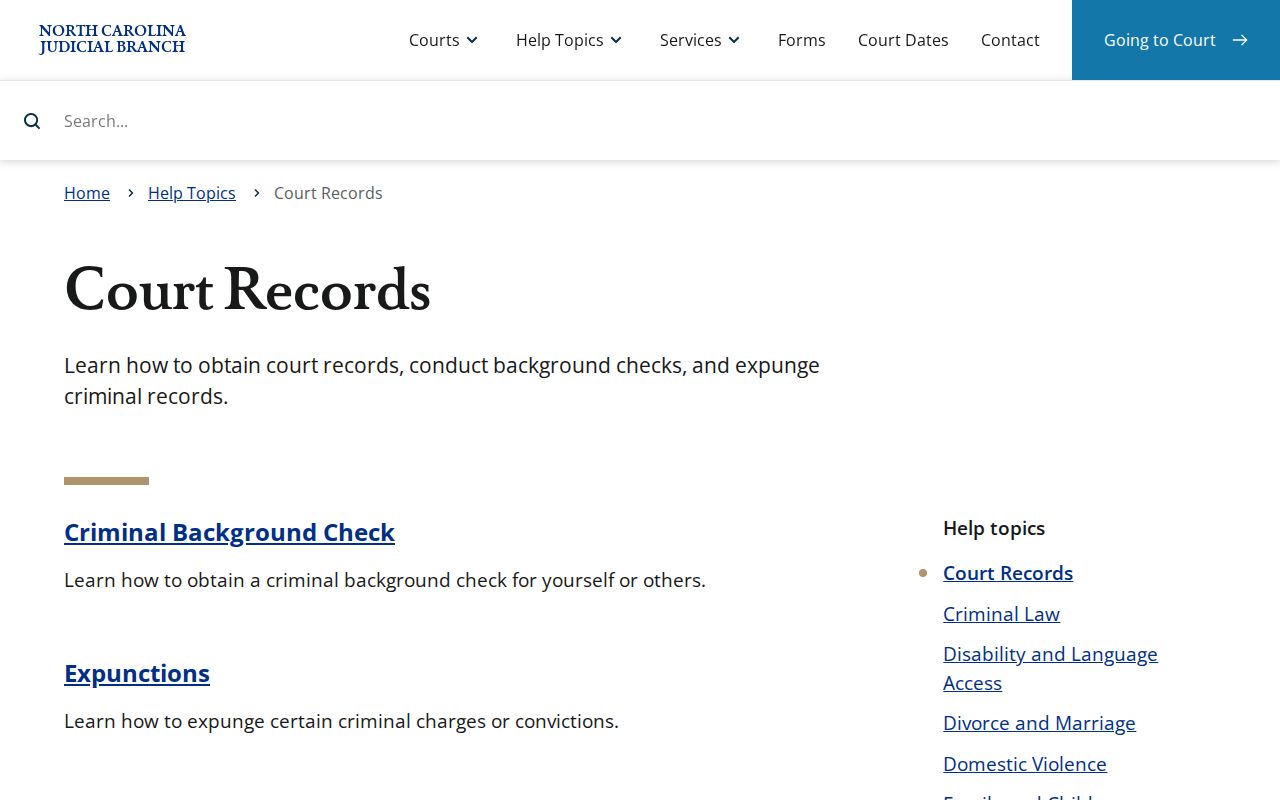
Along that path, one office holds the file. The Anson County Clerk of Superior Court is the local custodian for an Anson County case. Every records request ends up there.
Copy Fees and Certification
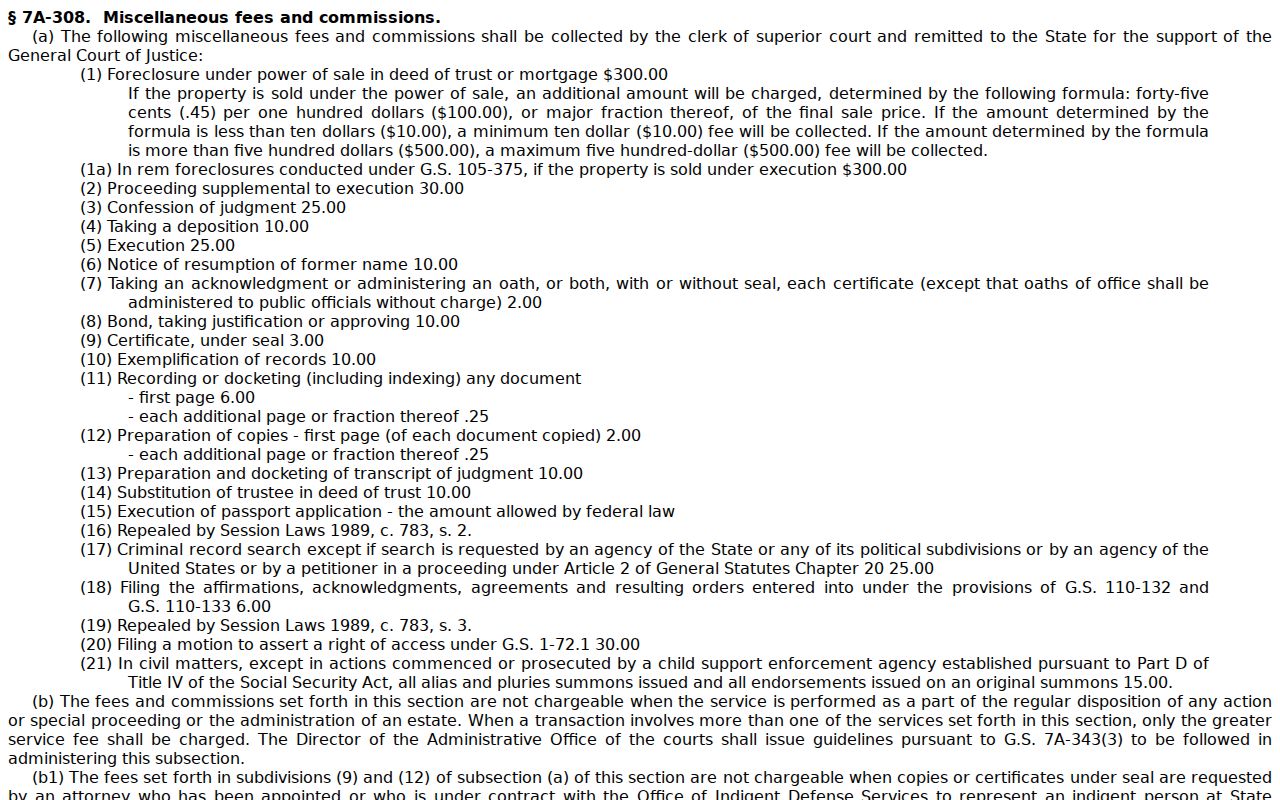
North Carolina General Statute 7A-308 sets the statewide Clerk amounts for Anson County. It covers copies and related services. The statute prices the first page of a document one way and additional pages another. A certificate under seal is listed separately from copy preparation. None of that promises a public Anson file. Format and timing are not promised either. Records vary. Before requesting anything, confirm the specific Anson County record and the total charge with the Anson Clerk. That one call prevents wasted fees and delays.
| Clerk service | Statutory amount | Record meaning |
|---|---|---|
| First page of each document | $2.00 | Preparation of a Clerk copy. |
| Each additional page or fraction | $0.25 | Additional copy-preparation charge. |
| Certificate under seal | $3.00 | Separate official certification item. |
| Exemplification of records | $10.00 | Higher-authentication record service. |
| Transcript of judgment preparation or docketing | $10.00 | Judgment-record service listed by statute. |
G.S. 7A-308 is the official source for the copy, seal, and exemplification amounts.
Copy Fees and Certification: The Anson County Clerk can tell you which documented service fits a specific Anson court-file request.
Anson County Clerk of Superior Court
114 N. Greene Street
Wadesboro, NC 28170
(704) 994-3800
Anson Court Transcript and Audio Requests
A transcript is not a docket sheet or a Clerk copy. It is the word-for-word record of an Anson proceeding. The official reporter or transcriptionist prepares it, at a separately set rate. The Anson contact directory lists the official reporter at (910) 997-9116 and the Superior Court Judges Office and court reporter at (910) 419-7686. Use those numbers for a transcript. Do not treat it as a routine copy request.
Audio takes another route. Under Judicial Branch guidance, a nonconfidential case may use Form AOC-G-114 to request a recording, subject to availability and the actual CD cost. A confidential case needs court permission through AOC-G-115. Neither route guarantees a recording exists or is public. Once the case and the request are identified, the Clerk can point you to the correct local process.
Note: A certified copy authenticates a Clerk record, while a transcript and an audio recording are separate products with their own access and production limits.
Older Anson Court Records
Older Anson research can push past what Portal covers. The State Archives finding aid lists county material from 1759 through 1960. That includes civil issue dockets and calendars. They date from 1888 and 1892. It also notes a record about an 1868 Wadesborough courthouse fire. None of that history proves a particular historic case survives online. It does show one thing. A modern Portal query will not answer every older Anson docket question.
Start with the Anson Clerk. It holds the local file and any available index or terminal path. For archival material rather than a current Clerk file, use the State Archives Anson County finding aid. It identifies the holdings and the proper request route. Keeping the historic source apart from the current Case Summary helps. That way a modern search result never gets mistaken for a full historical record.
Access Rules for Court Records
Public inspection is about more than a search returning a name. G.S. 7A-109 directs clerks to maintain files, dockets, and indexes. It also provides for public inspection during regular office hours except where law prohibits access. The Portal likewise limits sealed and confidential data. Documents and cases can be limited for public users too. A restricted result is not a technical gap. Do not try to defeat it with another search. The lawful route depends on the record. It also depends on your authority to inspect it. Access rules, not search tricks, decide what you may see.
Key rules:
G.S. 7A-109 requires Clerk record keeping and provides public inspection except where access is prohibited.
G.S. 7A-308 lists statewide Clerk service amounts for copies, certification, and exemplification.
G.S. 7B-3000 withholds juvenile records from public inspection except as the statute or court order allows.
The record-keeping statute is the official source for the Clerk and public-inspection rule.
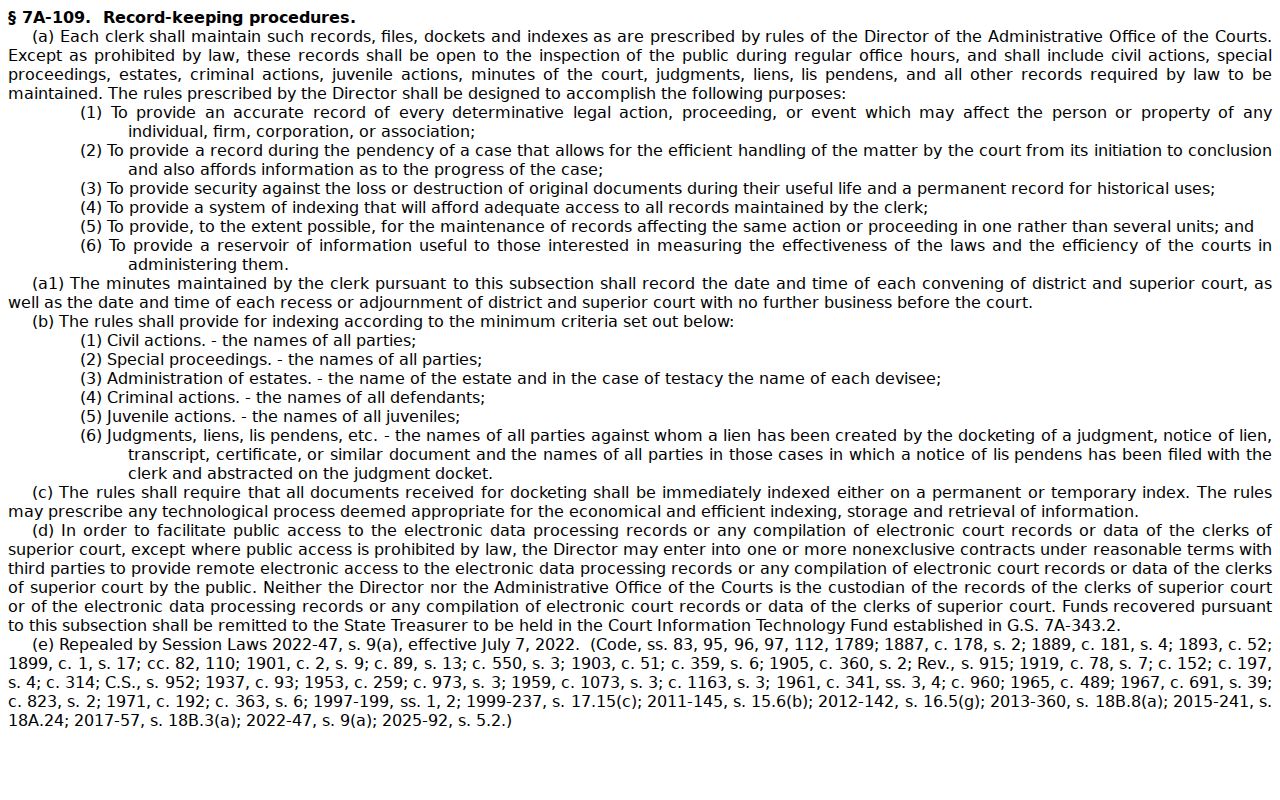
Public inspection is the default, but confidentiality and sealing rules can still close parts of an Anson County file.
Anson Court Record Restrictions and Expunctions
Not every Anson County court record is open to the public. Juvenile files fall under their own statute, which bars most public inspection. Sealed and confidential cases get similar protection. The Portal FAQ states it plainly: public users cannot view sealed or confidential data, documents, or cases in Portal. Domestic-violence information can also stay off the online display even when the case itself has a public side. A missing case proves nothing by itself. First confirm the exact Anson case number or citation format and where you searched. Then ask the Clerk what access the law allows rather than assuming a public docket search should reveal it.
Expunction works differently. It is a legal process controlled by specific statutes and eligibility rules. The Judicial Branch explains that petitions go to the Clerk in the county of charge or conviction. That makes Anson the place for an Anson matter. G.S. 15A-145 is one route. That statute carries its own conditions and a specified filing fee, and it never promises that every case qualifies. The Clerk can identify the right filing point. Legal eligibility still turns on the applicable law.
G.S. 15A-145 lays out one statutory expunction route and the filing requirements that come with it.
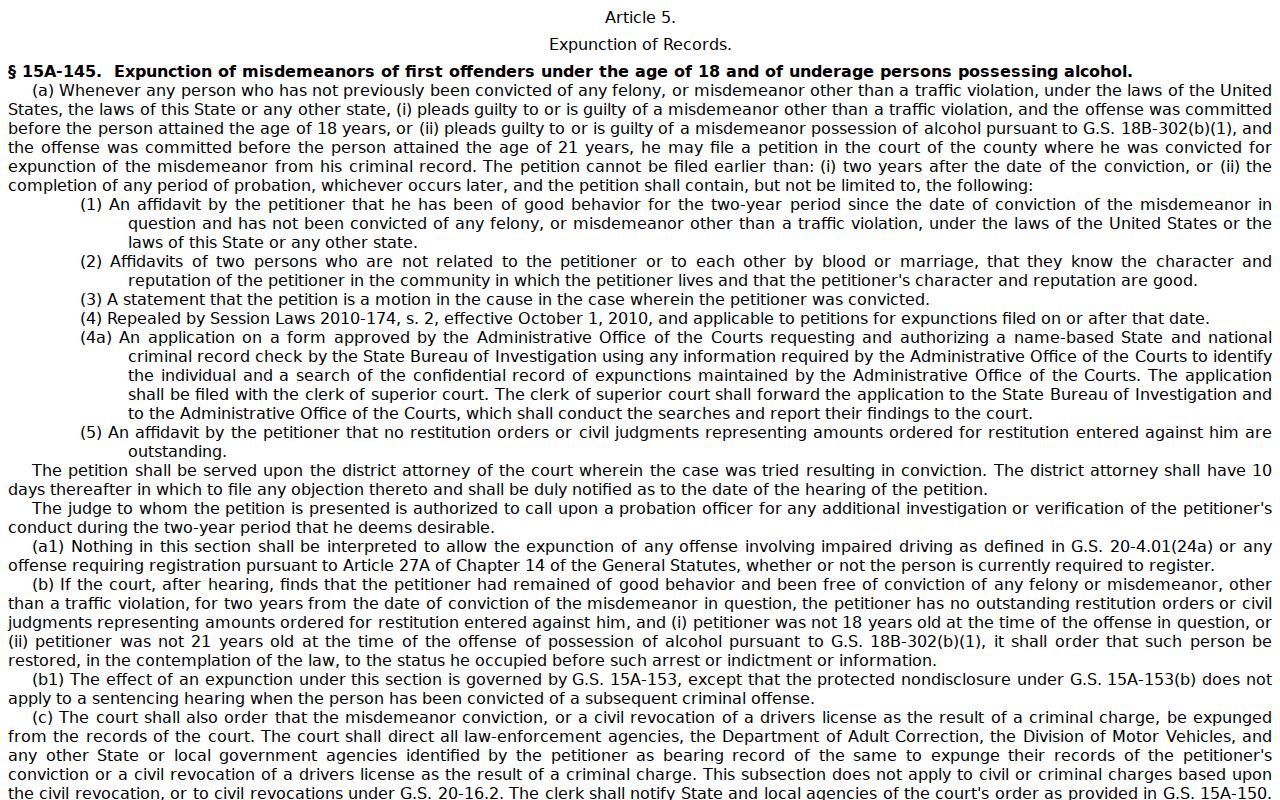
Each expunction category carries its own forms, conditions, and fees. No single statute can answer for all of them.
Anson State and Federal Court Records
Anson County cases live in two separate systems: state court and federal court. The Clerk of Superior Court and eCourts handle the ordinary side. That means Anson traffic tickets, misdemeanors, estates, and state civil matters. Federal jurisdiction is different. Anson sits in the Charlotte Division. Its parent is the U.S. District Court for the Western District of North Carolina. That court files electronically through CM/ECF. Public federal docket and document access runs through PACER, under federal rules. The two systems do not share records. A federal docket will not hold a local state-court Case Summary for an Anson matter.
Appeals split the same way. A federal district-court appeal goes to the U.S. Court of Appeals for the Fourth Circuit. It never goes to the North Carolina eCourts Portal. Federal bankruptcy has its own channel too. That is the Western District of North Carolina Bankruptcy Court.
The Fourth Circuit's official court page identifies the federal appellate channel. It handles federal cases from North Carolina.
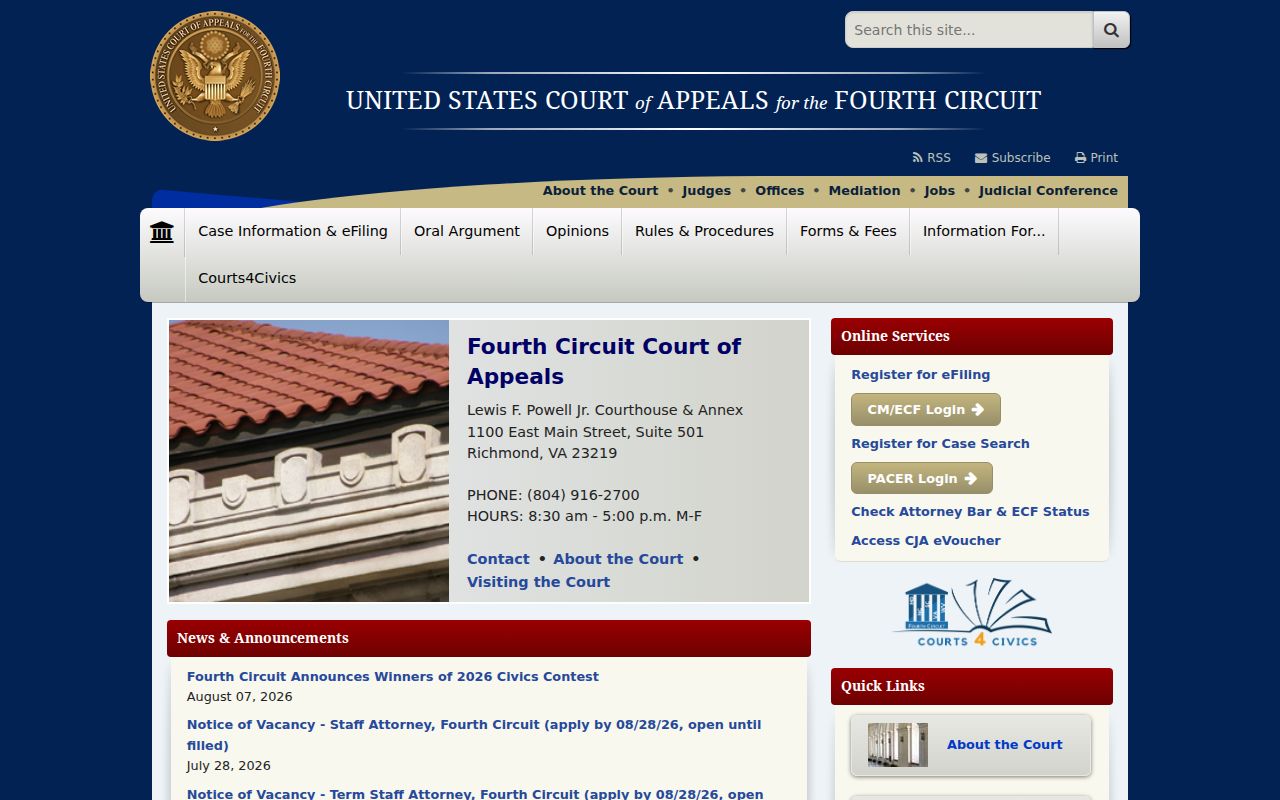
This points to a federal court route that sits apart from the state court records the Anson Clerk keeps.